
Introduction
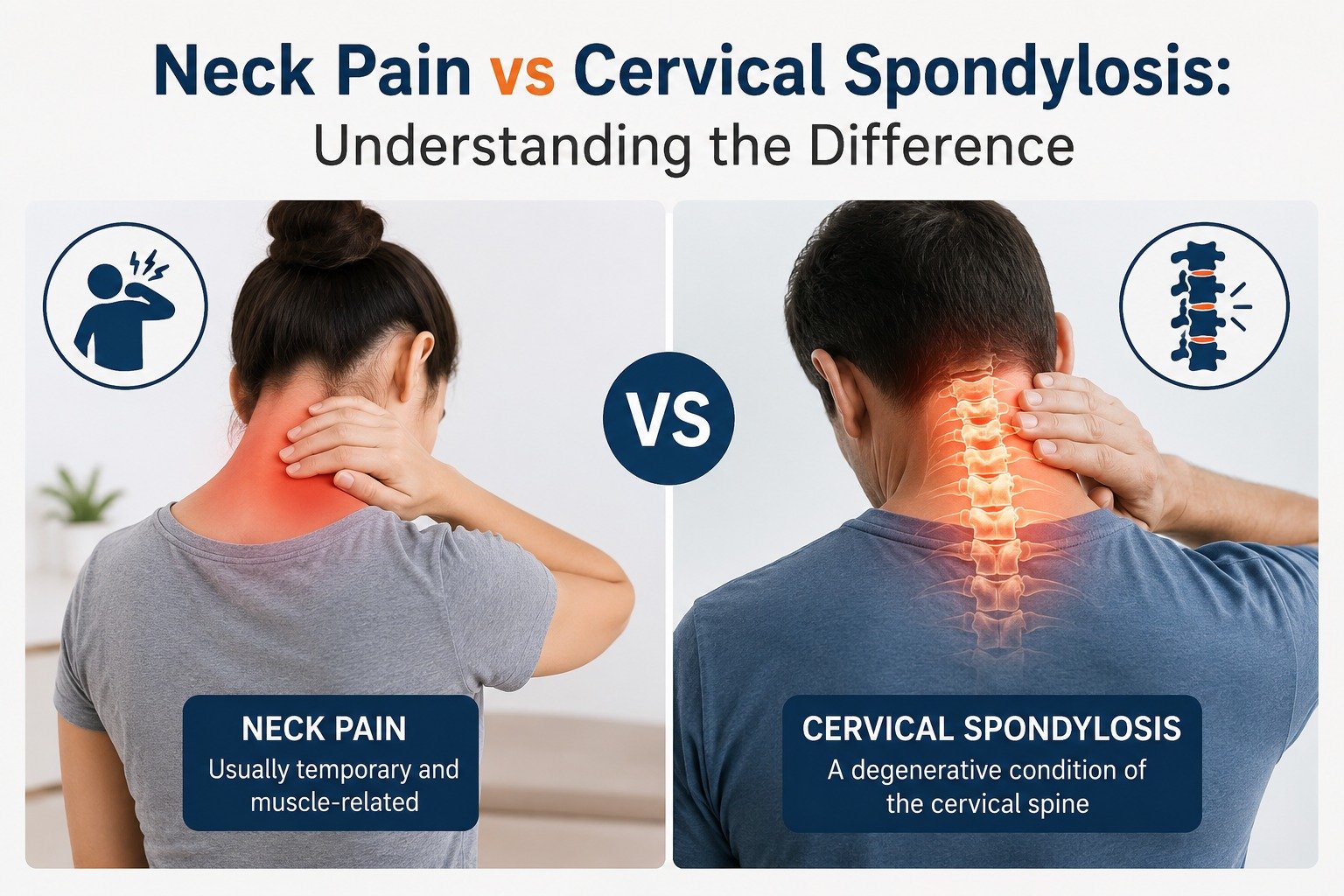
Neck pain is a very common problem and can happen to people of any age. In many cases, it is caused by poor posture, muscle strain or sleeping in an awkward position and it improves with simple care. However, some people assume that every neck problem is cervical spondylosis, which is not true.
Cervical spondylosis is a degenerative condition of the neck spine, while neck pain is a symptom that can happen for many different reasons. Knowing the difference between the two helps you understand when the problem is minor and when it needs proper medical attention.
What Is Neck Pain?
Neck pain refers to discomfort, stiffness or soreness in the neck region. It may be mild or severe, short-term or long-lasting, depending on the cause.
Often, neck pain comes from daily habits such as long hours on a computer, looking down at a phone or sleeping in an uncomfortable position. In many cases, it improves on its own with rest, posture correction and simple home care.
Common Causes of Neck Pain
Neck pain can develop for several everyday reasons, including:
- Poor posture while working on a laptop or mobile phone
- Muscle strain from overuse or sudden movement
- Sleeping in the wrong position
- Minor injuries or accidents
- Stress-related muscle tightness
- Sports-related strain
- Whiplash after a road accident
These causes usually affect the muscles and soft tissues around the neck rather than the spinal bones themselves.
What Is Cervical Spondylosis?
Cervical spondylosis is a condition caused by wear and tear in the bones, joints and discs of the cervical spine. It usually develops gradually with age.
As the spine ages, the discs may lose flexibility and moisture. Bone spurs, stiffness and narrowing around the nerves may then occur. In some people, these changes cause pain, numbness, weakness or balance problems.
Neck Pain vs Cervical Spondylosis
Here is a simple way to understand the difference:
Neck pain is usually a symptom, not a disease. It often happens because of poor posture, muscle strain or sleeping in the wrong position and it may improve with rest. Cervical spondylosis, on the other hand, is a degenerative condition of the cervical spine that develops slowly over time due to age-related wear and tear. Unlike ordinary neck pain, it may sometimes affect the nerves or spinal cord and often needs long-term management.
- Neck pain is a symptom, while cervical spondylosis is a spinal condition.
- Neck pain is often temporary, but cervical spondylosis usually develops gradually.
- Neck pain is commonly caused by posture or muscle strain, whereas cervical spondylosis happens because of age-related degeneration.
- Simple neck pain may improve with rest, but cervical spondylosis may need ongoing treatment.
- Ordinary neck pain usually does not affect nerves, but cervical spondylosis can compress the nerves or spinal cord in some cases.
- Neck pain can occur at any age, while cervical spondylosis is more common after 40 to 50 years.
Symptoms of Neck Pain
Symptoms of ordinary neck pain may include:
- Pain or soreness in the neck
- Stiffness while turning the head
- Discomfort after sitting for long periods
- Shoulder pain
- Headaches that begin from the neck
- Mild muscle spasms
Many of these symptoms improve within days or weeks, especially when the cause is posture-related.
Symptoms of Cervical Spondylosis
Cervical spondylosis can cause symptoms similar to neck pain, but it may also affect the nerves. Common signs include:
- Persistent neck pain
- Morning stiffness
- Pain spreading to the shoulders or arms
- Tingling or numbness in the hands
- Weakness in the fingers or arms
- Clicking or grinding sounds in the neck
- Difficulty with balance in advanced cases
- Trouble with fine hand movements
If the spinal cord is affected, symptoms may become more serious and require prompt medical care.
Risk Factors
Some factors make cervical spondylosis more likely, such as:
- Increasing age
- Poor posture
- Long hours of desk work
- Previous neck injury
- Repetitive neck movements
- Sedentary lifestyle
- Smoking
- Family history of spinal degeneration
A healthy lifestyle and proper posture can reduce strain on the neck over time.
When To See a Doctor
Not all neck pain needs urgent treatment, but some warning signs should not be ignored. You should consult an orthopedic specialist if you have:
- Neck pain lasting more than two weeks
- Severe pain after an injury
- Numbness or tingling in the arms
- Weakness in the hands
- Difficulty walking
- Loss of bladder or bowel control
- Fever with neck stiffness
- Unexplained weight loss
These symptoms may indicate nerve compression or another serious condition.
How Diagnosis Is Done
A doctor usually starts by asking about your symptoms and examining your neck movement, strength, reflexes and balance. This helps identify whether the pain is muscular or related to the spine.
If needed, the doctor may suggest imaging tests such as:
- X-ray, to check bone alignment and bone spurs
- MRI, to see discs, nerves and the spinal cord
- CT scan, for detailed bone images
- Nerve studies, if numbness or weakness is present
These tests help confirm whether the issue is simple neck strain or cervical spondylosis.
Treatment Options
Treatment depends on the cause and severity of symptoms.
For simple neck pain, treatment may include rest, pain-relief medicines, muscle relaxants, physiotherapy and heat or cold therapy. Improving posture and changing workspace habits also helps a lot.
For cervical spondylosis, doctors may recommend physiotherapy, neck exercises, anti-inflammatory medicines, posture correction and lifestyle changes. In some cases, injections or surgery may be needed if nerves or the spinal cord are badly compressed.
Can It Be Prevented?
Age-related changes cannot be fully prevented, but you can reduce stress on your neck with healthy habits. Good posture, regular exercise, neck strengthening and screen-time breaks can make a big difference.
Other useful habits include using a supportive pillow, keeping your screen at eye level, avoiding smoking and maintaining a healthy body weight. Small daily changes can protect the cervical spine in the long run.
Conclusion
Neck pain and cervical spondylosis are related, but they are not the same. Neck pain is a symptom that may come from strain, posture or injury, while cervical spondylosis is a degenerative condition caused by wear and tear in the neck spine.
Most neck pain improves with simple care, but persistent pain, numbness, weakness or balance issues should be evaluated by a doctor. Early diagnosis and the right treatment can help prevent complications and support better long-term neck health.
FAQs
1. Is every neck pain caused by cervical spondylosis?
No, most neck pain happens because of muscle strain, poor posture or minor injuries.
2. At what age does cervical spondylosis usually appear?
It becomes more common after the age of 40 and increases with age.
3. Can cervical spondylosis be cured completely?
The age-related changes cannot be reversed, but symptoms can usually be managed well.
4. When should I see a doctor for neck pain?
See a doctor if pain lasts more than two weeks, becomes severe or causes numbness or weakness.
5. Does exercise help cervical spondylosis?
Yes, guided exercises and physiotherapy can improve flexibility, reduce pain and support the neck.