
Introduction
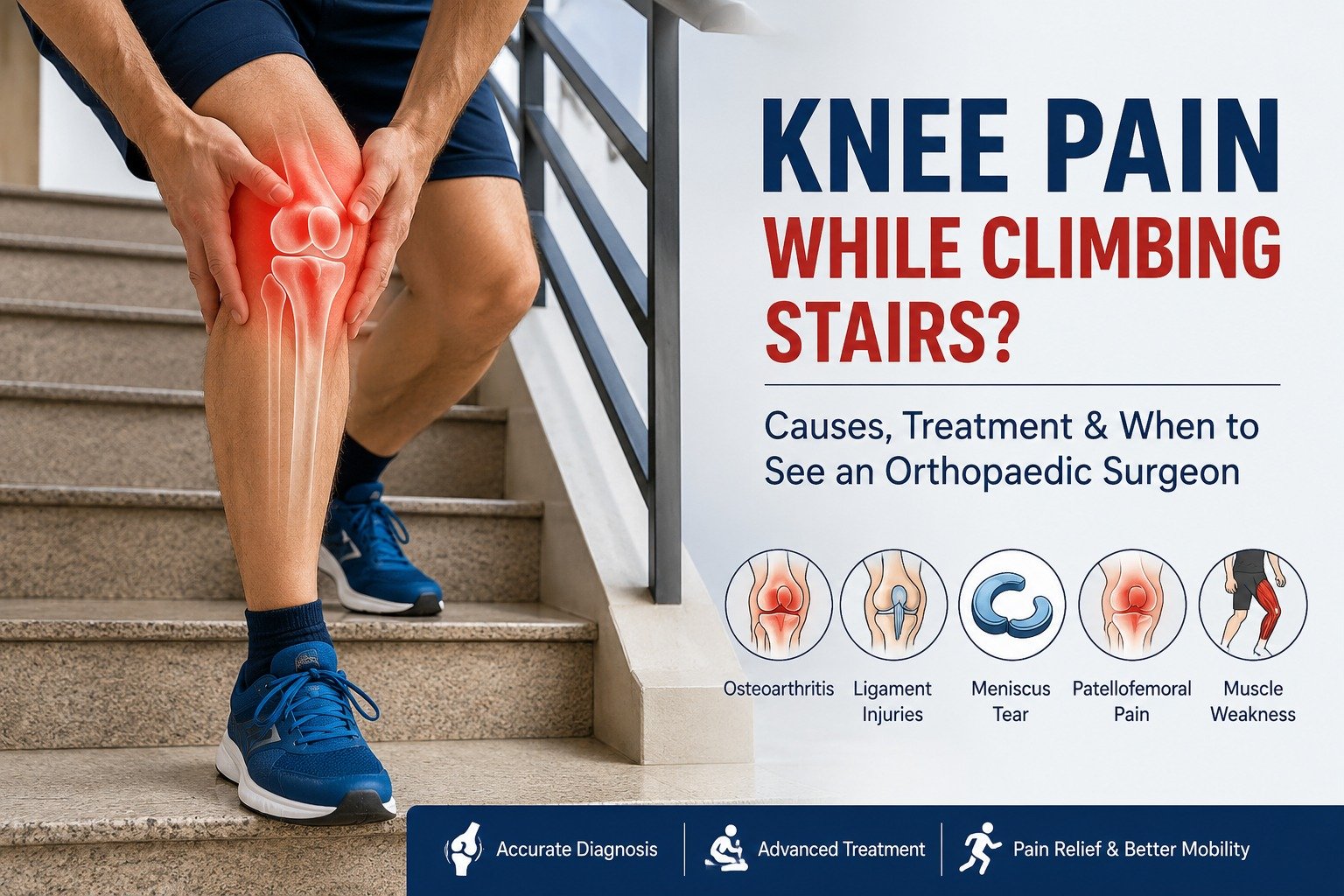
Knee pain while climbing stairs is a common complaint that affects people of all age groups. Whether you are a young athlete, a working professional or an older adult, pain in the knee while walking upstairs or downstairs can interfere with your daily routine and reduce your quality of life.
While occasional discomfort may result from overuse or muscle fatigue, persistent knee pain could indicate an underlying orthopaedic condition that requires medical attention.
In this comprehensive guide, we will explore the common causes of knee pain while climbing stairs, symptoms to watch for, effective treatment options, preventive measures and when it is time to consult an experienced orthopaedic surgeon.
Why Does Knee Pain Increase While Climbing Stairs?
Climbing stairs requires greater knee bending and places significant pressure on the kneecap, cartilage, ligaments and surrounding muscles. If any of these structures are damaged, weak or inflamed, you may experience pain while climbing or descending stairs.
The pain may be felt:
- Around the front of the knee
- Behind the kneecap
- On either side of the knee
- Deep inside the knee joint
The location, intensity and nature of the pain often help an orthopaedic surgeon identify its underlying cause.
Common Causes of Knee Pain While Climbing Stairs
1. Knee Osteoarthritis
Knee osteoarthritis is one of the most common causes of chronic knee pain, especially among adults over the age of 50. It occurs when the protective cartilage cushioning the bones gradually wears away, causing increased friction within the knee joint.
Common Symptoms
- Pain while climbing stairs
- Morning stiffness
- Swelling around the knee
- Grinding or clicking sensation
- Reduced knee flexibility
Early diagnosis and proper treatment can help slow the progression of osteoarthritis, reduce pain and improve mobility.
2. Patellofemoral Pain Syndrome
Patellofemoral Pain Syndrome, commonly known as runner's knee, is a condition in which the kneecap does not move properly within its groove. This can lead to pain around the front of the knee.
This condition commonly affects:
- Runners
- Cyclists
- Athletes
- Young adults
- People who sit for long hours
The pain often worsens while climbing stairs, squatting, kneeling or standing up after sitting for a prolonged period.
3. Meniscus Tear
The meniscus is a C-shaped piece of cartilage that acts as a shock absorber inside the knee joint. Sudden twisting movements, sports injuries or age-related degeneration can cause a meniscus tear.
Common Symptoms
- Sharp knee pain
- Swelling
- Locking or catching of the knee
- Difficulty bending the knee
- Pain while climbing stairs
Some minor tears may improve with rest, physiotherapy and medication, while severe injuries may require arthroscopic knee surgery.
4. Ligament Injuries
Ligaments such as the ACL, PCL and MCL help stabilize the knee joint. Sports injuries, road accidents, falls or sudden twisting movements may result in ligament damage.
Common Signs of a Ligament Injury
- Sudden knee pain
- Knee instability
- Swelling
- Difficulty walking
- A feeling that the knee may give way
ACL injuries are especially common among athletes involved in football, basketball, cricket and other sports requiring sudden changes in direction.
5. Tendinitis
Tendinitis refers to inflammation of the tendons around the knee. Repetitive jumping, running, climbing or heavy physical activity can place excessive stress on these tendons.
Symptoms of Knee Tendinitis
- Pain during physical activity
- Tenderness around the knee
- Mild swelling
- Stiffness after rest
Proper rest, activity modification, medication and physiotherapy usually help relieve the symptoms.
6. Muscle Weakness
Weak thigh muscles, particularly the quadriceps, and weak hip muscles may fail to provide adequate support to the knee joint. This increases stress on the kneecap, cartilage and ligaments.
Strengthening exercises prescribed by a physiotherapist can improve knee stability, reduce pain and make stair climbing more comfortable.
7. Excess Body Weight
Excess body weight places additional pressure on the knee joints during walking, climbing stairs and other daily activities. Over time, this increased pressure can accelerate cartilage wear and increase the risk of knee osteoarthritis.
Maintaining a healthy body weight is one of the most effective ways to reduce stress on the knees and protect long-term joint health.
Symptoms That Should Never Be Ignored
Occasional discomfort after exercise or excessive physical activity may improve with rest. However, persistent or worsening symptoms should not be ignored.
Consult an orthopaedic surgeon if you experience:
- Knee pain lasting longer than two weeks
- Persistent pain while climbing or descending stairs
- Swelling around the knee
- Knee locking or catching
- Clicking, popping or grinding sounds
- Difficulty walking
- Redness or warmth around the joint
- Inability to fully bend or straighten the knee
- Knee instability
- Repeated giving way of the knee
Ignoring these symptoms may allow the condition to worsen and make future treatment more complicated.
How Is Knee Pain Diagnosed?
An experienced orthopaedic surgeon will begin by reviewing your medical history, symptoms, activity level and any previous injuries. A physical examination will then be performed to assess knee movement, swelling, tenderness, strength and stability.
Depending on your condition, the following investigations may be recommended:
X-Ray
An X-ray can help identify knee osteoarthritis, fractures, joint-space narrowing and bone deformities.
MRI Scan
An MRI scan provides detailed images of the cartilage, ligaments, tendons, muscles and meniscus. It is commonly recommended when a soft-tissue injury is suspected.
CT Scan
A CT scan may be recommended in selected trauma cases or when detailed images of the bones are required.
Blood Tests
Blood tests may be advised when inflammatory arthritis, gout, autoimmune disease or infection is suspected.
Early and accurate diagnosis allows your orthopaedic surgeon to recommend the most appropriate treatment and improve the chances of faster recovery.
Best Treatment Options for Knee Pain While Climbing Stairs
Treatment depends on the underlying cause, severity of symptoms, age, general health and activity level of the patient.
Non-Surgical Treatment
Many patients with knee pain recover successfully without surgery. Initial treatment may include:
- Rest
- Ice therapy
- Compression
- Elevation
- Anti-inflammatory medicines
- Knee braces or supports
- Lifestyle modification
- Weight management
- Physiotherapy
Rest, ice, compression and elevation are commonly referred to as the RICE method and may help control pain and swelling after minor injuries.
Physiotherapy
Physiotherapy plays an essential role in strengthening the muscles, improving flexibility and restoring normal knee function.
A personalized physiotherapy program may include:
- Quadriceps strengthening exercises
- Hamstring stretching
- Hip-strengthening exercises
- Balance and stability exercises
- Range-of-motion exercises
Following a structured rehabilitation program can improve long-term outcomes and reduce the risk of recurring knee pain.
Injection Therapy
For patients with persistent pain that does not improve with medication and physiotherapy, an orthopaedic surgeon may recommend injection therapy.
Available options may include:
- Corticosteroid injections
- Hyaluronic acid injections
- Platelet-Rich Plasma or PRP therapy
These treatments may help reduce inflammation, relieve pain and improve joint function in selected patients. The suitability of an injection depends on the underlying knee condition.
Arthroscopic Knee Surgery
Knee arthroscopy is a minimally invasive procedure performed through small incisions. It may be recommended to diagnose or treat certain knee conditions.
Arthroscopy may be used for:
- Selected meniscus tears
- Ligament injuries
- Cartilage damage
- Loose bone or cartilage fragments
- Certain causes of knee locking
Benefits of Arthroscopic Surgery
- Smaller incisions
- Less post-operative pain
- Minimal scarring
- Faster recovery
- Shorter hospital stay in many cases
Knee Replacement Surgery
Patients with severe knee arthritis and advanced cartilage damage may require knee replacement surgery when non-surgical treatments no longer provide sufficient relief.
Knee replacement may be recommended when:
- Knee pain significantly affects daily life
- Walking and climbing stairs become difficult
- Medicines and physiotherapy no longer provide relief
- Joint stiffness becomes severe
- A visible knee deformity develops
Modern knee replacement techniques can provide significant pain relief, improve joint function and help patients return to a more active lifestyle.
Tips to Prevent Knee Pain
Although not every knee problem can be prevented, adopting healthy habits can reduce your risk of injury and joint damage.
Maintain a Healthy Weight
Reducing excess body weight decreases pressure on the knee joints and may slow the progression of knee osteoarthritis.
Exercise Regularly
Choose low-impact activities such as:
- Walking
- Swimming
- Cycling
- Yoga
These activities can improve fitness and mobility without placing excessive strain on the knee joints.
Strengthen the Leg Muscles
Strong quadriceps, hamstrings and hip muscles provide better support to the knee and improve joint stability.
Wear Proper Footwear
Supportive and well-fitting shoes improve lower-limb alignment and reduce unnecessary stress on the knees.
Warm Up Before Exercise
Gentle stretching and warm-up exercises prepare the muscles and joints for activity and may reduce the risk of injuries.
Avoid Overuse
Take regular breaks during repetitive activities and gradually increase the intensity of your workouts instead of making sudden changes.
When Should You Consult an Orthopaedic Surgeon?
Do not delay medical consultation if:
- Knee pain lasts longer than two weeks
- Swelling does not improve
- You cannot climb stairs comfortably
- Your knee repeatedly gives way
- Pain interferes with work or daily activities
- You have suffered a sports injury, accident or fall
- You cannot fully bend or straighten the knee
Early evaluation allows timely treatment and may help prevent further joint damage, muscle weakness and loss of mobility.
Conclusion
Knee pain while climbing stairs should not be ignored. While temporary discomfort may result from muscle strain, fatigue or overuse, persistent pain can indicate conditions such as knee osteoarthritis, ligament injuries, meniscus tears, patellofemoral pain syndrome or cartilage damage.
Identifying the underlying cause through proper diagnosis is essential for selecting the most effective treatment. Many cases improve with conservative treatments such as physiotherapy, medication, lifestyle modification, weight management and activity changes.
For advanced conditions, modern orthopaedic procedures such as knee arthroscopy and knee replacement surgery can restore mobility and significantly improve quality of life.
If you are experiencing ongoing knee pain while climbing stairs, consult an experienced orthopaedic surgeon for a comprehensive evaluation and personalized treatment plan. Early intervention can help you remain active, reduce pain and protect your knee joints for years to come.
Frequently Asked Questions
1. Why does my knee hurt when I climb stairs?
Knee pain while climbing stairs may result from osteoarthritis, patellofemoral pain syndrome, ligament injuries, meniscus tears, tendinitis or muscle weakness. A proper orthopaedic evaluation is necessary to determine the exact cause.
2. Is knee pain while climbing stairs always a sign of arthritis?
No. Although arthritis is a common cause, knee pain can also occur because of sports injuries, tendon inflammation, cartilage damage, kneecap problems, muscle weakness or overuse.
3. Can physiotherapy help relieve knee pain?
Yes. Physiotherapy strengthens the muscles around the knee, improves flexibility, reduces pain and enhances joint stability. It is often one of the first treatments recommended for knee pain.
4. When should I see an orthopaedic surgeon for knee pain?
You should consult an orthopaedic surgeon if the pain lasts longer than two weeks, is associated with swelling or instability, follows an injury or interferes with walking, climbing stairs and other daily activities.
5. Can knee pain while climbing stairs be prevented?
Maintaining a healthy weight, exercising regularly, strengthening the leg muscles, wearing supportive footwear, warming up before exercise and avoiding excessive strain can help reduce the risk of knee pain.