
Introduction
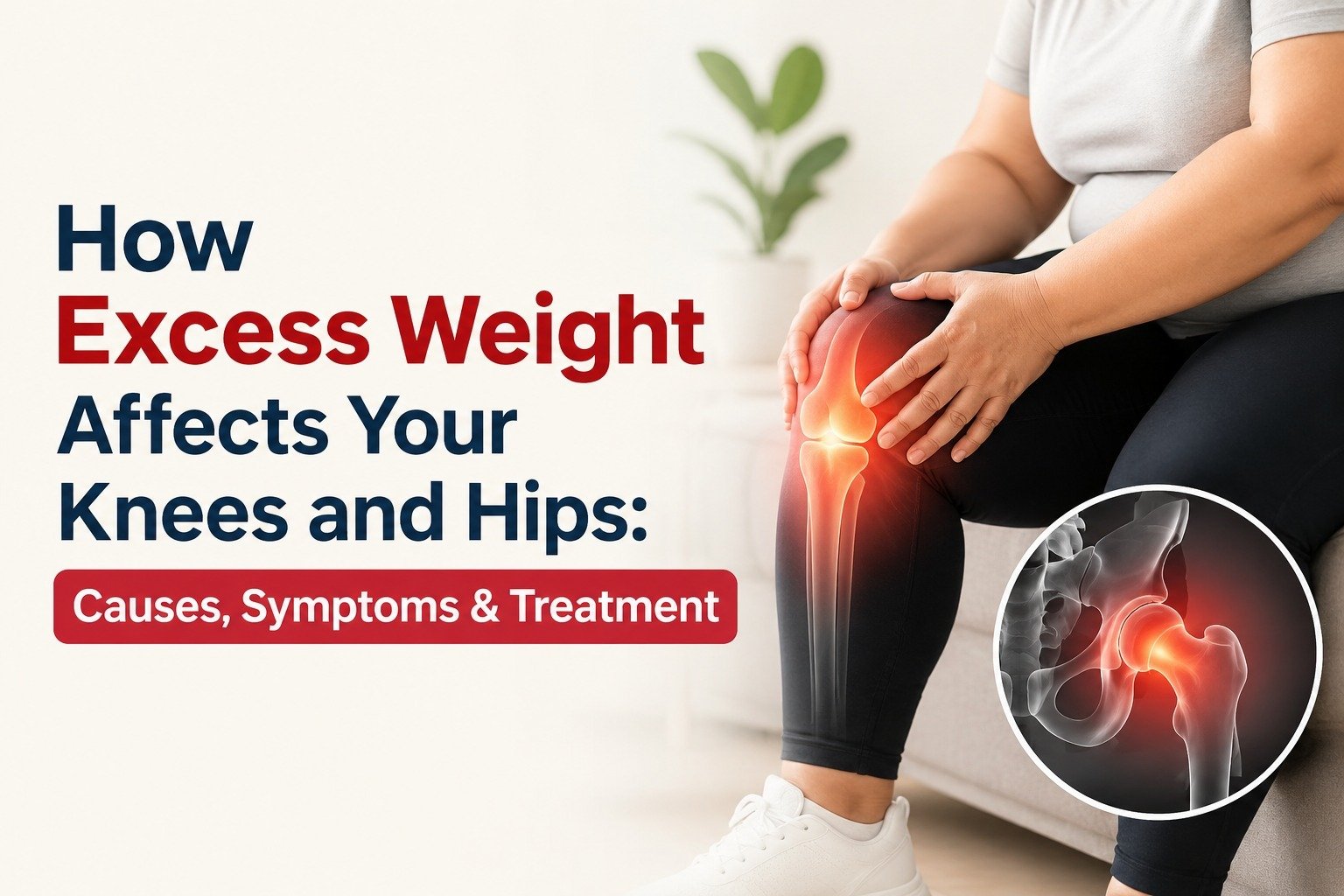
Our knees and hips are among the hardest-working joints in the body. They support our weight every time we stand, walk, climb stairs, exercise or even sit down. When body weight increases, these joints must bear extra pressure every day. Over time, this added stress can lead to pain, stiffness, inflammation and long-term joint damage.
Many people assume that knee or hip pain is simply a part of getting older. However, excess body weight is one of the biggest risk factors for developing joint problems at any age. Even gaining a few extra kilograms can significantly increase the pressure placed on the lower-body joints.
Understanding how excess weight affects your knees and hips can help you take the right steps to protect your joints, reduce pain and improve your quality of life.
Why Are the Knees and Hips Most Affected?
The knees and hips are known as weight-bearing joints because they support the body's weight during daily activities. Every movement creates additional force on these joints:
- Walking places nearly two to three times your body weight on the knees.
- Climbing stairs may increase the pressure to four to six times your body weight.
- Running can generate forces of up to seven to eight times your body weight.
This means that carrying even a small amount of extra weight can dramatically increase the load on your joints. For example, gaining 5 kg of body weight may add approximately 20 kg of force on the knees with every step. Across thousands of steps each day, this repeated load can have a major impact.
How Excess Weight Damages the Knees and Hips
1. Increases Pressure on Joint Cartilage
Cartilage acts as a cushion between bones, allowing smooth and pain-free movement. Excess body weight places constant pressure on this cartilage, causing it to wear down faster than it can repair itself.
As the cartilage becomes thinner, bones may begin rubbing against one another, causing:
- Pain
- Swelling
- Stiffness
- Reduced mobility
This cartilage damage is one of the leading causes of osteoarthritis.
2. Accelerates Osteoarthritis
Osteoarthritis is the most common type of arthritis affecting the knees and hips. People who are overweight have a higher risk of developing osteoarthritis because excess weight causes both mechanical stress on the joints and increased inflammation throughout the body.
As osteoarthritis progresses, everyday activities such as walking, bending or climbing stairs can become increasingly painful.
3. Causes Chronic Inflammation
Body fat is not simply stored energy. It is active tissue that releases inflammatory chemicals known as cytokines. These substances can damage joint tissues, increase swelling, slow healing and make joint pain worse.
Therefore, excess weight affects the joints not only through added pressure but also through inflammation.
4. Weakens Supporting Muscles
Extra weight may lead to reduced physical activity because of discomfort or fatigue. When the muscles around the knees and hips become weaker, they provide less support to the joints.
Weak supporting muscles may result in:
- Poor balance
- Joint instability
- Increased risk of falls
- Faster joint wear
Strong muscles help absorb shock and reduce pressure on the joints.
5. Changes the Walking Pattern
People carrying excess weight may unknowingly change the way they walk to avoid discomfort. These altered movement patterns can cause uneven joint pressure, hip misalignment, knee instability and lower back pain.
Over time, poor posture and an abnormal gait may create additional orthopaedic problems.
Common Symptoms of Weight-Related Knee and Hip Problems
If excess weight is affecting your joints, you may experience:
- Knee pain while walking
- Hip pain after standing for long periods
- Joint stiffness in the morning
- Swelling around the knees
- Difficulty climbing stairs
- Pain while getting up from a chair
- Reduced flexibility
- Clicking or grinding sounds in the joints
- Difficulty exercising
- Reduced walking distance
These symptoms often worsen gradually when left untreated.
Risk Factors That Can Increase Joint Damage
Certain factors can make joint problems worse when combined with excess weight:
- Sedentary lifestyle
- Aging
- Previous joint injuries
- Poor posture
- Weak muscles
- Family history of arthritis
- Diabetes
- Vitamin D deficiency
Managing these risk factors may help slow joint degeneration.
Can Losing Weight Reduce Knee and Hip Pain?
Yes. Healthy weight loss is one of the most effective ways to reduce stress on weight-bearing joints. Losing even 5–10% of body weight may significantly decrease pressure on the knees and hips.
Benefits of healthy weight loss may include:
- Less joint pain
- Improved mobility
- Reduced inflammation
- Better balance
- Slower progression of osteoarthritis
- Improved quality of life
- Reduced need for pain medication
Even modest weight loss can make daily activities more comfortable.
Best Exercises for Protecting the Knees and Hips
Exercise helps strengthen the supporting muscles and reduce joint stress. Low-impact activities are generally recommended.
Walking
Gentle walking improves circulation, strengthens muscles and helps maintain joint flexibility.
Swimming
Water supports the body, reducing pressure on painful joints while allowing you to improve strength and mobility.
Cycling
Cycling can improve knee mobility and leg strength without excessive impact.
Yoga
Yoga and gentle stretching may improve:
- Flexibility
- Balance
- Muscle strength
- Posture
Strength Training
Strengthening the quadriceps, hamstrings, glutes and core muscles provides better support for the knees and hips.
If you already have joint pain, perform exercises under professional guidance.
Healthy Lifestyle Tips to Protect Your Joints
Maintain a Healthy Weight
Reducing excess body weight decreases stress on weight-bearing joints.
Eat a Balanced, Anti-Inflammatory Diet
Include foods such as:
- Fruits and vegetables
- Whole grains
- Lean protein
- Nuts and seeds
- Foods rich in omega-3 fatty acids
Limit sugary drinks, processed foods and excessive fried foods.
Stay Physically Active
Regular movement helps keep the joints flexible and the muscles strong. Choose an activity level appropriate for your health and joint condition.
Wear Supportive Footwear
Proper shoes improve alignment and help reduce impact on the knees and hips.
Avoid Sitting for Long Hours
Take short walking or movement breaks every 30–60 minutes to reduce stiffness.
Strengthen the Core Muscles
A strong core improves posture and reduces unnecessary stress on the hips and knees.
When Should You See an Orthopaedic Doctor?
Consult an orthopaedic specialist if you experience:
- Persistent knee or hip pain
- Pain lasting more than a few weeks
- Swelling that does not improve
- Difficulty walking
- Joint locking
- Sudden inability to bear weight
- Limited range of motion
- Pain that interferes with daily activities
Early diagnosis can help prevent permanent joint damage and improve treatment outcomes.
Treatment Options
Treatment depends on the underlying condition, severity of symptoms, age, activity level and overall health. Your doctor may recommend:
- Lifestyle modifications
- Weight management
- Physiotherapy
- Pain-relieving or anti-inflammatory medication
- Knee braces or supportive devices
- Joint injections
- Cartilage-preservation procedures
- Joint replacement surgery for advanced arthritis
For selected patients with knee arthritis caused by poor alignment, a knee osteotomy may help redistribute weight across the knee, reduce pressure on the damaged area and delay the need for joint replacement.
Every treatment plan should be tailored to the individual's symptoms, joint condition and personal needs.
Conclusion
Understanding how excess weight affects your knees and hips is the first step toward protecting your joint health. Carrying extra weight places continuous stress on these essential weight-bearing joints, increasing the risk of pain, inflammation, cartilage damage and osteoarthritis.
Even small lifestyle changes, such as maintaining a healthy weight, staying physically active, eating a balanced diet and strengthening the supporting muscles, can reduce joint stress and improve mobility. If knee or hip pain is affecting your daily life, timely advice from an orthopaedic specialist can help identify the cause and prevent further damage.
Taking care of your joints today can help you remain active, independent and comfortable for years to come.
Frequently Asked Questions (FAQs)
1. Can being overweight cause knee and hip pain?
Yes. Excess weight increases pressure on the knees and hips, contributing to joint pain, inflammation and a higher risk of osteoarthritis.
2. How much weight loss helps reduce joint pain?
Losing approximately 5–10% of body weight may significantly reduce stress on the joints and improve pain and mobility.
3. Which joints are most affected by excess weight?
The knees and hips are commonly affected because they bear much of the body's weight during standing, walking and other daily activities.
4. Is walking good for knee pain caused by excess weight?
Gentle walking is a low-impact activity that can strengthen muscles, maintain joint flexibility and support healthy weight management. If walking increases pain, seek professional advice before continuing.
5. Can weight loss prevent knee replacement surgery?
In some cases, maintaining a healthy weight and following an appropriate treatment plan may slow joint damage and delay or reduce the need for knee replacement surgery.
6. When should I consult an orthopaedic doctor for knee or hip pain?
Consult an orthopaedic specialist if pain persists for more than a few weeks, worsens over time, causes swelling, limits movement or interferes with daily activities.