
Introduction
A hip fracture is a serious injury that occurs when the upper end of the femur (thigh bone) breaks near the hip joint. It most commonly affects older adults, especially those with osteoporosis, but can also happen to younger people after high-impact trauma such as road accidents or sports injuries.
Hip fractures can compromise mobility, independence and quality of life. Timely diagnosis, the right treatment and a structured rehabilitation plan are essential to minimize complications and restore function.
What is a Hip Fracture?
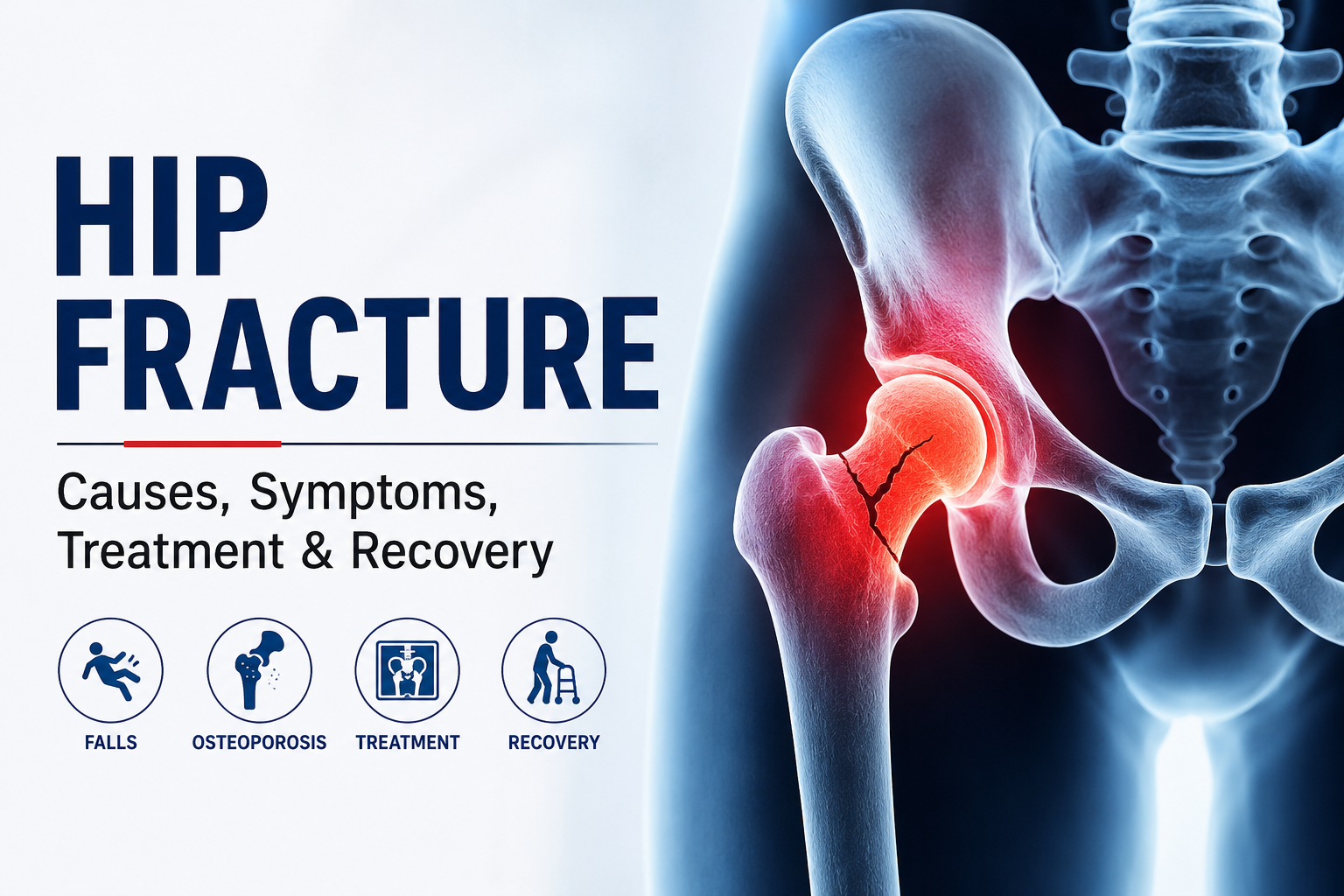
The hip joint is a ball-and-socket joint where the rounded head of the femur fits into the pelvic socket. A hip fracture refers to a break in the upper portion of the femur.
Depending on where the bone breaks, surgeons classify hip fractures into different types that guide treatment and prognosis.
Types of Hip Fractures
Femoral Neck Fracture
This break occurs just below the ball of the hip joint. It often affects elderly people after a fall and may disrupt blood supply to the femoral head, increasing the risk of poor healing.
Intertrochanteric Fracture
This occurs between the greater and lesser trochanters (bony prominences on the femur). These fractures typically have better blood supply and often respond well to fixation.
Subtrochanteric Fracture
This break happens below the trochanters and is more likely after high-energy trauma or in bones weakened by disease.
Causes of Hip Fractures
Hip fractures result from a combination of mechanical force and bone health factors.
- Falls, especially in older adults
- Osteoporosis
- Road traffic accidents
- Sports injuries
- Bone disorders such as cancer metastasis, Paget’s disease, osteomalacia and severe vitamin D deficiency
- Repetitive stress injuries
Risk Factors That Increase the Likelihood of Hip Fracture
- Advanced age
- Female gender, especially after menopause
- Poor nutrition and low calcium intake
- Vitamin D deficiency
- Sedentary lifestyle
- Vision and balance problems
- Long-term corticosteroid use
- History of previous fractures
Recognizing Symptoms of a Hip Fracture
Common signs include:
- Sudden severe pain in the hip or groin
- Inability to stand or walk
- Difficulty moving the affected leg
- Swelling and bruising around the hip
- Shortening of the injured leg
- Outward turning of the affected leg
- Tenderness around the hip
In some incomplete or hairline fractures, a person may still manage a few steps before pain limits movement. Any new hip pain after a fall or injury should prompt immediate medical assessment.
Diagnosing a Hip Fracture
Physical Examination
A doctor assesses pain, leg position, limb length and the ability to move the hip and knee.
X-Rays
The first-line imaging test used to confirm most hip fractures.
MRI Scan
Used when X-rays are inconclusive, especially for detecting stress fractures or occult (hidden) fractures.
CT Scan
Provides detailed bone images useful for surgical planning in complex fractures.
Bone Density Testing
A DEXA scan may be recommended to evaluate osteoporosis after initial treatment.
Treatment Options
Most hip fractures require surgery to restore alignment, stabilize the bone and permit early mobilization.
Internal Fixation
Screws, plates or intramedullary nails stabilize the fracture and allow the bone to heal properly. This approach is commonly used in younger patients and selected fracture types.
Partial Hip Replacement (Hemiarthroplasty)
The damaged femoral head is replaced with an implant. This option is often recommended for older patients with displaced femoral neck fractures.
Total Hip Replacement (Arthroplasty)
Both the femoral head and the acetabulum (hip socket) are replaced. This procedure may offer excellent long-term mobility in suitable patients.
Non-Surgical Treatment
Non-operative management is reserved for patients who are too frail for surgery or have stable, non-displaced fractures. Treatment includes pain management, physical therapy and close monitoring.
Early Post-Operative Care
Early mobilization, usually within 24–48 hours after surgery, is encouraged to reduce complications and improve recovery.
- Pain control using medications and nerve blocks
- Blood clot prevention
- Wound care and infection prevention
- Supervised rehabilitation
Potential Complications
- Deep vein thrombosis (DVT)
- Pneumonia
- Surgical site infection
- Implant failure
- Delayed healing or nonunion
- Long-term loss of mobility
Rehabilitation and Recovery
A structured rehabilitation program plays a vital role in regaining strength, mobility and independence.
First 1–2 Weeks
- Pain management
- Gentle movements
- Assisted standing and walking
6–12 Weeks
- Bone healing progresses
- Walking ability improves
- Daily activities gradually resume
3–6 Months
- Strengthening exercises
- Balance training
- Improved mobility
Up to 1 Year
Some patients achieve near-complete recovery, although outcomes vary depending on age, health status and rehabilitation adherence.
Key Elements of Rehabilitation
- Physiotherapy for strength and balance
- Occupational therapy for daily activities
- Adequate nutrition with protein, calcium and vitamin D
- Lifestyle modifications
Preventing Hip Fractures
Improve Bone Health
Consume adequate calcium and vitamin D through diet, sunlight exposure and supplements when necessary.
Regular Exercise
Weight-bearing activities, resistance training and balance exercises help maintain strong bones and reduce fall risk.
Home Safety
- Remove loose rugs
- Install handrails and grab bars
- Ensure adequate lighting
- Keep walkways clutter-free
Regular Health Checkups
Screening for osteoporosis, reviewing medications and addressing vision problems can reduce fracture risk.
Healthy Habits
Avoid smoking and limit alcohol consumption to support bone health.
When Should You See a Doctor?
Seek immediate medical attention if you experience:
- Severe hip or groin pain after a fall
- Inability to stand or walk
- Visible deformity of the leg
- Shortening or outward rotation of the leg
Early treatment significantly improves outcomes and reduces complications.
Practical Considerations in India
- Access to timely surgery and rehabilitation varies by region.
- Many government schemes and private insurance plans cover hip fracture treatment.
- Early referral to higher-level centers may be necessary in rural areas.
- Family involvement often plays an important role in long-term recovery.
Conclusion
A hip fracture is a major health event, particularly for older adults. With timely diagnosis, appropriate treatment and dedicated rehabilitation, many patients regain mobility and return to daily activities.
Maintaining strong bones, staying physically active, preventing falls and undergoing regular health checkups remain the most effective ways to reduce the risk of hip fractures.
Frequently Asked Questions (FAQs)
1. Can hip fractures heal without surgery?
Some non-displaced fractures and patients who are not fit for surgery may be managed conservatively, but most hip fractures benefit from surgical treatment.
2. What role does physiotherapy play after hip fracture surgery?
Physiotherapy helps restore strength, balance and walking ability while reducing the risk of complications.
3. How long before a person can walk after hip fracture surgery?
Many patients begin standing and walking with assistance within 24–48 hours after surgery, though complete recovery may take several months.
4. Which supplements help prevent hip fractures?
Calcium and vitamin D are essential for bone health. Additional osteoporosis medications may be recommended by a doctor.
5. How can families help a recovering patient at home?
Families can assist by creating a safe environment, supporting rehabilitation exercises, ensuring proper nutrition and helping with follow-up care.