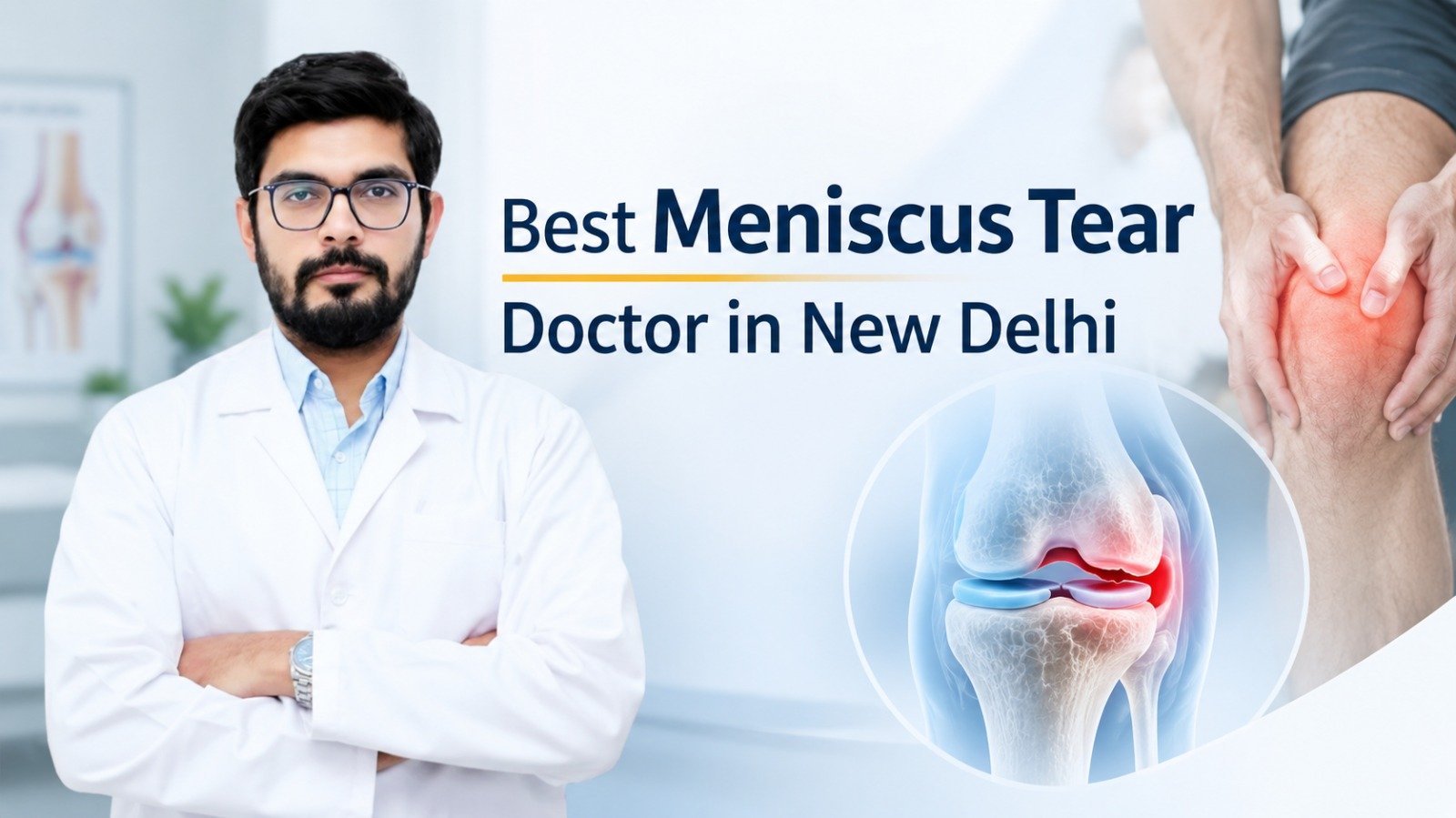
Knee pain after a sudden twist, sports injury, fall or even a simple movement can sometimes be related to a meniscus tear. The meniscus is a C-shaped piece of cartilage located between the thigh bone and shin bone. It helps absorb shock and contributes to the stability and smooth movement of the knee. When the meniscus is injured, a person may experience knee pain, swelling, stiffness, clicking, catching or difficulty moving the knee normally. In some cases, the knee may even feel as though it is locking or giving way. Because these symptoms can also occur with other knee conditions, getting the right diagnosis from an experienced orthopaedic specialist is important. If you are looking for the Best Meniscus Tear Doctor in New Delhi, choosing a specialist with experience in knee injuries, meniscal problems, arthroscopy and sports-related conditions can help ensure that your condition is properly evaluated and an appropriate treatment plan is considered.
What Is a Meniscus Tear?
A meniscus tear is an injury to the cartilage that acts as a cushion between the bones of the knee joint. There are two menisci in each knee and they help distribute load across the joint while supporting stability. A meniscus can tear because of a sudden twisting or pivoting movement, particularly during sports or physical activities. Falls, squatting movements and other knee injuries can also cause a tear. In older adults, age-related changes in the knee can make the meniscus more vulnerable to injury, sometimes even after a relatively minor movement. The type, location and extent of a tear can vary considerably. This is one reason why treatment should be based on an individual assessment rather than assuming that every meniscus tear requires the same approach.
Common Symptoms of a Meniscus Tear
A meniscus injury does not always produce the same symptoms in every person. Some people notice symptoms immediately after an injury, while others may develop discomfort gradually.
Common symptoms may include:
- Pain around the knee joint
- Swelling or stiffness
- Clicking or popping while moving the knee
- Difficulty fully bending or straightening the knee
- Catching or locking of the knee
- A feeling that the knee may give way
- Pain while twisting, squatting or changing direction
- Reduced range of knee movement
Mechanical symptoms such as catching or locking can occur when a torn portion of the meniscus interferes with normal knee movement. If these symptoms continue after an injury or begin affecting walking, exercise, work or everyday activities, consulting a meniscus tear specialist in Delhi can help determine the underlying cause.
When Should You Consult a Meniscus Tear Doctor in New Delhi?
Knee pain after an injury should not always be treated as a simple strain. Persistent symptoms may require a detailed orthopaedic evaluation.
You should consider consulting a meniscus tear doctor in New Delhi if you experience:
- Persistent knee pain after twisting or falling
- Repeated swelling of the knee
- Difficulty walking or putting weight on the leg
- Knee locking or catching
- Difficulty bending or straightening the knee
- Pain during squatting or climbing stairs
- Recurrent knee instability
- Symptoms that continue despite rest and basic treatment
- An MRI report indicating a meniscus tear
Early evaluation can help identify whether the symptoms are actually coming from the meniscus or from another structure within the knee.
How Is a Meniscus Tear Diagnosed?
A proper diagnosis usually begins with a detailed discussion about the injury, symptoms and activities that make the pain worse. The doctor may examine the knee for tenderness, swelling, movement limitations and signs of instability. Imaging may also be recommended depending on the clinical situation. An MRI can provide detailed information about the meniscus and other soft tissues of the knee and may help identify the location and pattern of a tear. A diagnosis should therefore consider the patient's symptoms, physical examination and imaging findings together. An MRI finding alone does not necessarily mean that surgery is required.
Meniscus Tear Treatment in New Delhi
The appropriate treatment for a meniscus tear depends on several factors, including the type and location of the tear, symptoms, age, activity level, associated knee injuries and overall joint condition.
Non-Surgical Treatment
Some meniscus tears may be managed without surgery, particularly when symptoms are mild or the tear is stable. Depending on the individual's condition, treatment may include activity modification, medication for pain and inflammation, physiotherapy and exercises to improve knee strength and movement. Small or stable tears may sometimes settle with appropriate conservative management. The goal is to reduce symptoms and improve knee function while allowing the patient to gradually return to normal activities.
Arthroscopic Meniscus Treatment
For selected patients, particularly those with persistent symptoms, certain displaced tears or mechanical problems such as locking, arthroscopic treatment may be considered. Knee arthroscopy is a minimally invasive procedure in which a small camera and specialised instruments are inserted through small incisions around the knee. Depending on the tear and the condition of the tissue, the surgeon may repair the meniscus or remove only the damaged portion when appropriate. Meniscus repair aims to preserve as much healthy meniscal tissue as possible when the tear is suitable for repair. The exact surgical approach depends on factors such as tear pattern, location, tissue quality and associated injuries.
Why Choosing the Right Meniscus Tear Doctor Matters
A meniscus injury can range from a small stable tear to a more complex injury associated with ligament or cartilage damage. Therefore, choosing an orthopaedic doctor experienced in meniscus treatment, knee arthroscopy and sports injuries can be valuable. When looking for a meniscus tear specialist in New Delhi, patients may consider:
- Experience in treating knee and meniscus injuries
- Expertise in arthroscopic knee procedures
- Experience with sports-related knee injuries
- Detailed clinical assessment
- Availability of appropriate diagnostic facilities
- Individualised treatment planning
- Focus on rehabilitation and recovery
- Experience with both surgical and non-surgical treatment options
The objective should not simply be to treat an MRI finding. The treatment plan should address the patient's symptoms, knee function and overall condition.
Meniscus Tear and Knee Arthroscopy in Delhi
For patients who require surgical treatment, arthroscopy is commonly used for selected meniscal and other knee conditions. Compared with traditional open procedures, arthroscopy uses smaller incisions and specialised instruments to access the joint. Depending on the procedure performed, patients may require a period of rehabilitation after surgery. Recovery can vary significantly because a simple meniscus procedure and a meniscus repair do not necessarily have the same rehabilitation requirements. This makes postoperative follow-up and a personalised rehabilitation plan an important part of the treatment journey.
Why New Delhi Patients Should Not Ignore Persistent Knee Pain
Knee pain that repeatedly returns after physical activity, twisting or sports should not simply be ignored. A meniscus tear can cause ongoing pain, swelling and mechanical symptoms, while untreated knee problems may affect mobility and daily activities. At the same time, not every case of knee pain requires surgery. Some meniscal injuries can be managed conservatively, while others may benefit from an arthroscopic procedure. The correct approach depends on the individual diagnosis and clinical findings. Consulting an experienced orthopaedic doctor for meniscus tear in Delhi can help you understand the condition and available treatment options.
Finding the Best Meniscus Tear Doctor in New Delhi
When searching online for the Best Meniscus Tear Doctor in New Delhi, patients often look for a specialist who can provide comprehensive care from diagnosis through treatment and rehabilitation. A consultation with an experienced knee specialist can help determine whether the symptoms are related to a meniscus tear, ligament injury, cartilage problem or another knee condition. After evaluation, the doctor can explain the available treatment options and recommend an approach suited to the patient's condition. Whether you need meniscus tear treatment in Delhi, a second opinion on an MRI report or an assessment for possible knee arthroscopy, a specialised orthopaedic consultation can be an important first step toward managing persistent knee symptoms.
Conclusion
A meniscus tear can affect people of different ages and activity levels, from athletes and active adults to older individuals experiencing degenerative changes in the knee. Symptoms such as pain, swelling, clicking, catching, locking and restricted movement should receive appropriate medical attention when they persist. If you are searching for the best Meniscus Tear Doctor in New Delhi, look for an experienced orthopaedic and knee specialist who can evaluate your symptoms, review relevant imaging and determine whether conservative care, rehabilitation or arthroscopic treatment is appropriate. The right treatment depends on the individual tear and the overall condition of the knee. With timely assessment and a personalised treatment plan, patients can work toward reducing symptoms, improving knee function and returning to their regular activities.
Frequently Asked Questions
1. What is a meniscus tear?
A meniscus tear is an injury to the cartilage that cushions and supports the knee joint. It can occur due to twisting injuries, sports activities, falls or age-related changes.
2. What are the common symptoms of a meniscus tear?
Common symptoms include knee pain, swelling, stiffness, clicking, catching, locking, difficulty moving the knee and a feeling of instability.
3. Is every meniscus tear treated with surgery?
No. Treatment depends on the type and location of the tear, symptoms, activity level and other factors. Some tears can be managed with non-surgical treatment, while selected cases may require arthroscopic treatment.
4. Is MRI required for a meniscus tear?
An MRI may be recommended when a doctor needs detailed information about the meniscus and other soft tissues of the knee. The need for imaging depends on the individual clinical assessment.
5. What is knee arthroscopy for a meniscus tear?
Knee arthroscopy is a minimally invasive procedure that uses a small camera and specialised instruments to examine and treat problems inside the knee. Depending on the tear, the meniscus may be repaired or the damaged portion may be treated surgically.
6. When should I see a meniscus tear doctor in New Delhi?
You should consider an orthopaedic consultation if knee pain, swelling, locking, catching, restricted movement or instability continues after an injury or starts affecting your everyday activities.